
Come be our guest at 10:00 a.m. on Sunday mornings!
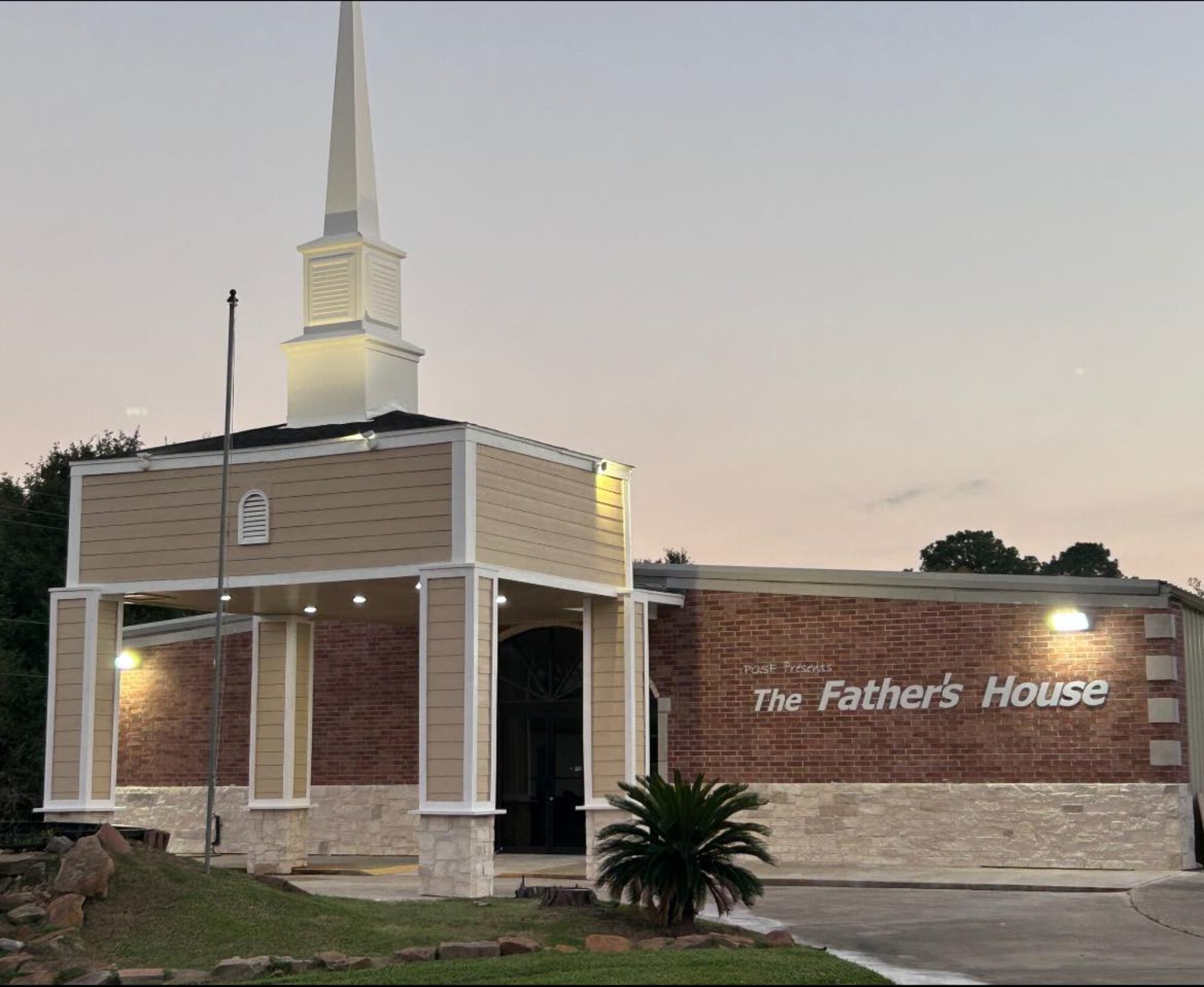

We want to see you go from where you are to where God wants you to be.
We spend a lot of time talking about what prayer “is”. Today I want to talk about a few things that prayer is “not”.
Prayer is not something you give God as leftovers. He wants to hear from you first. Prayer should never be a “Plan B”.
Prayer is not unanswered. Sometimes the answer is “yes”, sometimes it is “no” and sometimes it is “wait”. Sometimes not having an answer, is the answer. An old quote says it well…”There are times God punishes us mildly by ignoring our prayers and severely by answering them.”
Prayer is not just a 30 minute session at the altar at church. Prayer is a way of life. It is a constant state of mind.
Prayer is not ordinary. Prayer should be expecting the miraculous. It is communicating with the God of the universe, so it could never be described as “ordinary”.
Prayer is not you solving the issue for the Lord. Your prayers should be taking a situation before God and laying it at his feet, not giving Him instructions on how He should fix it.
Prayer is not a one-way conversation. Spend more time listening in your prayer time than talking.
Prayer is not an option. It is a biblical mandate.
Prayer is not a means by which to escape the biblical principal of reaping and sowing. You will reap what you sow. Many people make bad decisions and expect to pray themselves out of the consequences. It doesn’t quite work that way.
Prayer is not a guarantee against suffering. Prayer may not keep you from suffering, but will certainly help you to endure it.
From Flo Shaw, World Network of Prayer
I know this title may seem a little long, maybe a little strange, but you do not understand how important it is to me. My salvation, my whole life as I have known it, probably depended on a simple saint who was faithfully committed to prayer meeting.
It was in the early ’30’s when walking was more common than driving. Port Arthur, Texas was the place. A young couple from central Texas had moved there to work in the oil refinery. They called a small apartment home for themselves and their three young children. Church attendance was not on their weekly agenda. In fact, it was not on their agenda at all. But a faithful prayer warrior changed that.
Every morning a little before nine o’clock, a little lady passed in front of their little apartment with her Bible under her arm. To the young mother inside the little apartment it soon became a part of her morning routine to watch for the little lady who always passed her door a little before nine o’clock.
Where is she going every day? Why does she always have a Bible under her arm? Who is she? What is this about?
Then one morning, some would say as fate would have it, she stopped and knocked on the door. (From my vantage point, I know it wasn’t fate, but unspoken faith from a fertile heart.) When the young mother stood face to face with the lady from the sidewalk, she received an invitation to an old-fashioned tent revival. Few words were spoken, but the simple invitation seemed to speak to the young mother all day from its resting place on the dresser. By five-thirty in the evening the children were bathed and dressed for going out and supper was on the table. A little bewildered, the hardworking young man looked at his lovely dressed-up wife, wondering.
“We are going to church tonight,” she explained.
Willingly, he agreed.
It was a strange experience–the tent, the people, the praying, the preaching. But at the close of the service the young father said to his wife, “You go and pray. I’ll stay with the children.”
Kneeling at an altar, she was totally transformed by the baptism of the Holy Ghost!
Among those gathering around was the little lady from the sidewalk with the Bible under her arm.
“Where do you go every morning?”
“We have nine o’clock prayer meeting every day.”
“Could we come?” asked the young couple.
“Well, we normally don’t have prayer meeting on Saturday morning,” the Pastor interjected, “but we will if you want to come.”
Saturday morning, nine o’clock prayer meeting found the young couple joining the faithful saints. Prayer was made. Baptism was explained. Both agreed to baptism in the name of Jesus Christ. Now, it was the young man’s turn for transformation as he broke the waters of baptism, speaking in tongues, filled with the Holy Ghost.
The young couple were my mother and father, E. W. and Johnnie Ruth Caughron. These events transpired before my birth. Consequently, I was born into a Spirit-filled home. My parents’ dedicated ministry carried them in soul-winning revivals and building of churches from Texas to Alaska. Dozens and dozens of preachers were called and hundreds and hundreds of saints were impacted by their ministry.
What if the little lady on the sidewalk with the Bible under her arm had not been faithful to prayer meeting? I shudder at the thought–I probably wouldn’t be writing this article.
Thetus Tenney, Guest Writer
Too many people today live out their Christian faith from event to event: Easter Sunday, Christmas Eve candlelight service, a revival, a praise concert, or a special church dinner. But in between they fail to manifest a lifestyle of a Christian. They live for God for the earthly benefits, not for fellowship with Jesus Christ. They reject Christ’s instruction: “If any man will come after me, let him deny himself, and take up his cross daily, and follow me” (Luke 9:23).
Special church events are not wrong; they are an important part of life. But they are just the introduction to something much bigger and better! Events should direct us to a lifestyle of daily prayer, Bible reading, compassion for the lost, and concern for the unfortunate. They are stepping stones to building a life of faith and relationship with Jesus Christ.
A Student’s Prayer for a New School Year
Lord Jesus, I ask for Your help as I begin this new school year.
Allow me to experience Your presence in the many blessings You put before me.
Open my eyes to the new challenges and exciting opportunities that this new school year brings.
Open my heart and mind to new friends and new teachers.
Give me a generous spirit to be enthusiastic with my studies and courage to accept new opportunities.
Help me to be attentive to my teachers and let me experience Your presence in my new friends.
Jesus, inspire me to do my best this year! Amen
The fooling is a brief chapter from a book entitled Grace Manifold, By Ken Gurley:
They had the same last name, the same genetic heritage flowed through their veins, yet they avoided each other. For as long as most of the family could remember, these two boys were enemies.
As the boys grew they played together. They chased rabbits, hunted squirrels, and swam in their favorite East Texas swimming hole. But when they became men, something happened/ One family member recalled that the brothers had gone into business together. Each felt that the other was cheating him. They parted ways and the silent years began.
At family gatherings on Thanksgiving and Christmas, they remained sullen, trapped in yesterday’s misunderstanding. They would not speak to each other even to answer the simplest question or to give a warm greeting. While their heredity united them, a huge chasm separated these two brothers. In the bottom of this gorge flowed a deep river of hurt and anguish. These chasm seemed uncrossable, the river seemed inexhaustible.
Then it happened. One of the brothers found out that he had a terminal disease. Lying on his deathbed, he recognized the wasted years spent on the bleak land of unforgiveness. He remembered the sleepless, miserable nights when he had rehearsed the supposed wrong over and over, burning it into his memory and churning it in his heart. But what did it matter now? He was dying.
He called his estranged brother to his bedside. “I am dying,” he began without fanfare. “We never made peace in life. Can we make peace at my death?”
The torrent of emotion was spent. With tears flowing down their faces the brothers embraced. In life they remained alienated. In death they were united.
Perhaps the most descriptive term for death is separation. The living is separated from the dead by death’s thick drape. At death the visible gives way to the invisible, the temporal gives way to the eternal, and mortality glimpses the window or immortality.
In some strange way, however, death also unites. At the death of a loved one, hatchets are buried and wrongs are forgotten. Sometimes death becomes the link that enables a reunion impossible in life. Death can draw people together.
What is true in human nature is superlative in Christ’s death. Jesus prophesied that His death would “draw all men” unto Him (John 12:32). At the end of His life, eleven apostles, some women and a few others still followed Him. Through Christ’s death, however, the entire world is drawn to Him.
Just West of Baton Rouge, Louisiana, is the sprawling Atchafalaya Swamp. Standing in the swamp’s murkey waters are large trees draped with heavy moss. The darkness of the waters shrouds its contents of catfish, snakes and alligators. Its silt and mire are filled with decaying, organic matter. The swamp is a dreadful place in which to be lost.
An airboat, barge, or wading gear is not necessary to maneuver this swamp, for spanning this huge swamp is a bridge some 18 miles in length. Unless a person is merely seeking adventure, the bridge is the best means of crossing the swamp. It makes the opposite shore of the swamp accessible.
Christ’s death affected the whole world. At Golgotha, the place of the skull. the Cross spanned the awful gulf of sin. God and humanity were brought closer through this blood-stained bridge. The apostle Paul said, “But now in Christ Jesus ye who sometimes were far off are made nigh by the blood of Christ” (Ephesians 2:13).
The bible clearly teaches that sin fractures our relationship with God. The sin that drove Adam and Eve into hiding and away from paradise still alienates people from God. Like sheep seeking their own way, people are led astray by sin, which brings a separation from God (Isaiah 53:6, 59:2).
The cross is the only means for a person to bridge sin’s gap and be reconciled to God. Man could never be good enough in himself to turn God’s face toward him, so God turned His face toward man through Jesus Christ.
The cross spanned the swamp of sin for the rich, the poor, the alcoholic, the adulterer, the thief, the murderer, the gossip. The cross bridges the chasm.
Sin’s swamp is a miserable place. Life in the land of unforgiveness, wrath and unhappiness is perilous and replete with disappointment. Yet Christ’s death spanned this dreadful place and like nothing else, brings us close to God. It restores the fractured relationship between God and humanity. The blood of Christ gives us access to a lost paradise. His blood reunites.
Time is your most precious possession. Do you spend it on what matters most?
“Don’t give holy things to dogs, and don’t throw your pearls in front of pigs. They will stomp on the pearls, then turn around and attack you.” Matthew 7:6 (CEB)
One of the most irreplaceable, valuable things we possess is our time. We cannot go out and buy more time, we cannot go into the kitchen and whip up a couple of extra hours. And yet time is one of the things we squander the most easily.
We waste time, we spend time doing things that sap our energy. If someone asked you to give them money, you might decline, but when they ask you for your time, how do you respond? There’s nothing wrong with giving someone your time, but I have often been sucked into commitments I should have avoided by thinking—well, it’s only a few hours of my time. I forget time is a pearl of great price.
This odd saying of Jesus forces us to consider: what are the holy things I possess? What are my pearls—the things I value most, the things that are rare and precious to me? My stuff is not holy. My possessions are not my pearls. But the hours I have each day—these are precious.
As my children get older, and move toward independence, I realize I do not get these days to do over. When other people try to demand those pearls from me, sometimes the most holy thing I can do is refuse. One of the more countercultural ways I spend time with my family is to take a weekly Sabbath.
The Bible tells us the Sabbath is to be kept holy. Those precious hours, when I set aside my work and busyness to focus on my relationships with God and my family—they are pearls. In order to protect them, I sometimes have to say no to the requests of others. I think Jesus would approve.
Faith Step: What do you need to say no to in order to protect the holy things in your life? Think particularly of your schedule—have you thrown your pearls before pigs?
Article by Keri Wyatt Kent, Chicago, Illinois, as appeared in Mornings with Jesus
Interesting Read
The Story is familiar. Moses sent 12 spies to investigate what needed to be done to take the Promised Land. When they returned from their trip, 10 spies spoke words of unbelief. The children of Israel listened to them more than the two men who said they were well able to take the land. The 10 spies were negative and filled with unbelief. They believe what they saw, more than what God had promised them.
In order to take the world we must cleanse our mind of negative thinking. Our attitude is crucial in conquering, The mind must be cleansed from anything that is connected to unbelief.
Paul wrote, “Let this mind be in you, which was also in Christ Jesus.” (Philippians 2:5). The mind of Christ! What we feed the mind will determine what we are. Understanding this should cause us to be extremely careful, for our mind is like a computer: what you enter into it determines its performance. Thus our meditations are critical. What the ear hears, what the eyes sees, what we read, the music that is listened to, anything that affects the mind needs to be critiqued.
“Finally brethren, whatsoever things are true, whatsoever things are honest, whatsoever things are just,whatsoever things are pure, whatsoever things are lovely, whatsoever things are of good report; if there be any virtue, and if there be any praise, think on these things.” (Philippians 4:8). Whoever you run with will influence the way you think.
We are the product of our environment. Every one must selective of their choice of friends. Who you run with will rub off on you. Negative conversations produce negative thoughts. Paul said, “Bring every thought into captivity.”
What discussions go on between you and your friends, even preacher friends, will determine your performance. To discuss negative situations, bad things that happen to people, even people that do bad things, is not edifying. There is a time and place to deal with the failures of men, but to dwell and linger on negatives will adversely affect you. One cannot expect to have and fruitful and productive ministry dwelling in such a negative atmosphere. There is plenty of doom and gloom if one looks for it. However, it will keep the church from living in a growth mold and hinder revival! It is imperative to control our minds in order for us to go forward.
As the children of Israel listened to the wrong voices, so can we if we are not careful. If one listens to those who are anti-revivalists, those who say the church is not what it used to be, it’s going down, such notions will keep you from the Promised Land.
Kenneth F. Haney
Don’t do things on purpose, do things IN purpose…. Pastor Custer
If you have a tendency to despair over lost opportunities or if you worry about the future, ask yourself this question: “What is right in front of me?” In other words, what circumstances and relationships are currently available to you? This question can get your focus off a past regret or a scary future and back to what God can do in your life.
It’s similar to the question God asked Moses at the burning bush. Moses was troubled. Aware of his own weaknesses, he expressed fear about the Lord’s call for him to lead Israel out of bondage. So God simply asked Moses, “What is that in your hand?” (Ex. 4:2). The Lord shifted Moses’ attention away from his anxiety about the future and suggested he notice what was right in front of him—a shepherd’s rod. God showed Moses that He could use this ordinary staff to perform miracles as a sign for unbelieving people. As Moses’ trust in God grew, so did the magnitude of miracles God worked through His servant.
Do you think about past failures too much? Do you have fearful thoughts about the future? Recall God’s question: “What is that in your hand?” What current circumstances and relationships can God use for your benefit and His glory? Entrust them—and your life—to Him.
Onward and upward your course plan today,
Seeking new heights as you walk Jesus’ way;
Heed not past failures, but strive for the prize,
Aiming for goals fit for His holy eyes. —Brandt
You can’t change the past,
but you’ll ruin the present by worrying about the future.
Article by Dennis Fisher, Our Daily Bread, Copyright 2013 by RBC Ministries, Grand Rapids, MI. Reprinted by permission. All rights reserved. Further distribution is prohibited without written permission from RBC Ministries